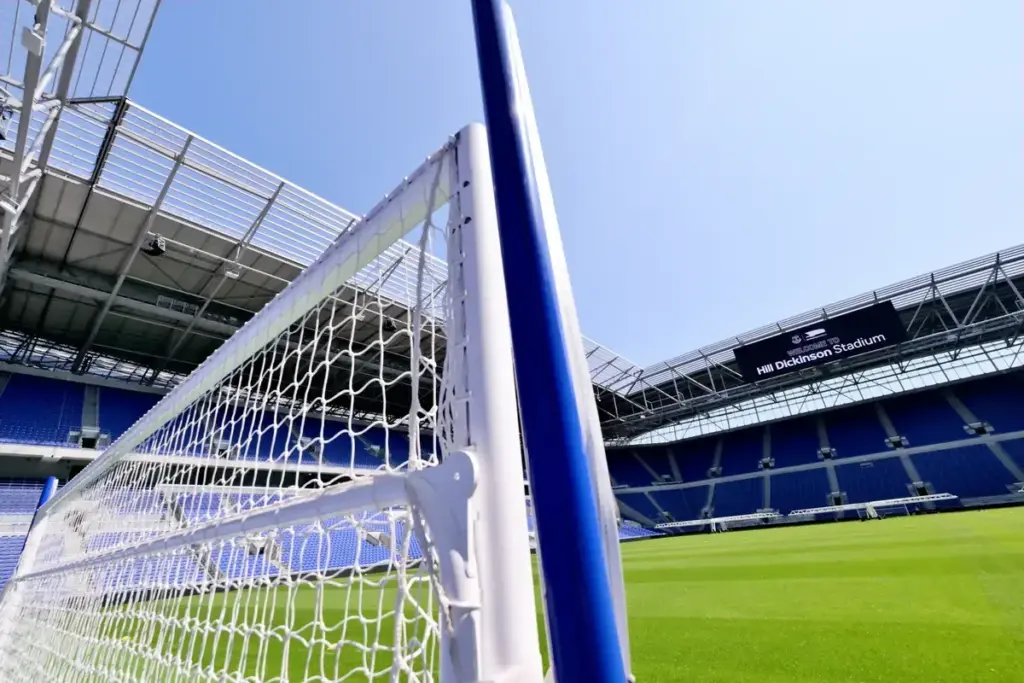

- Everton matched their final Goodison points total in year one.
- Other Premier League clubs experienced mixed fortunes after relocating.
- The second season often reveals whether a move brings real progress.
Other Premier League clubs experienced mixed fortunes after relocating stadiums. The second season often reveals whether a move brings real progress.
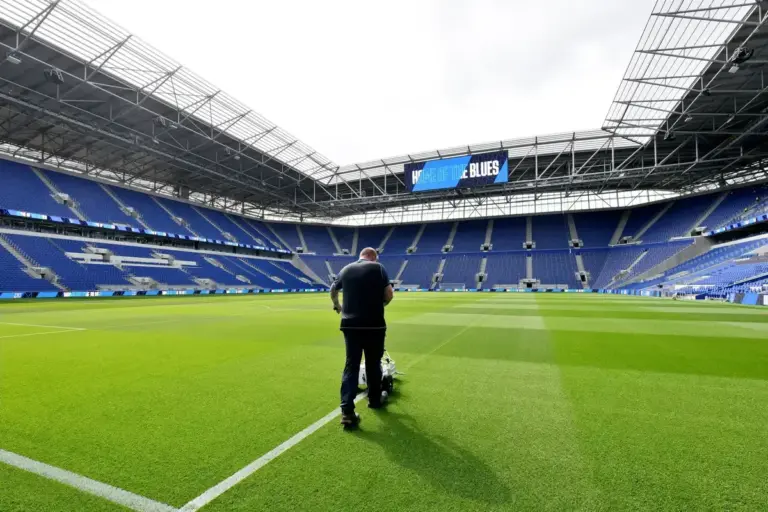
The excitement surrounding Hill Dickinson Stadium has subsided a little. No longer is it a novelty. Neither does the talk now centre on the venue itself. The views across the waterfront, the matchday experience and the scale of Everton’s new home dominated discussions since the move from Goodison Park.
But now, as the Blues prepare for their second full season at the Hill Dicky, as it’s affectionately known, a more important question begins to emerge. Has the move actually improved Everton as a football team? Not as a club. That’s obvious … but as a team.
History suggests the answer is not always straightforward. Recent Premier League clubs that have changed stadiums have experienced very different outcomes. Some adapted quickly. Others struggled to recreate the atmosphere and results they enjoyed in their previous homes.
Everton’s first season at the Hill Dickinson sits somewhere in the middle.
How other Premier League clubs fared after moving
| Club | Final Season at Old Stadium | First Season at New Stadium | League Position Change | Points Change |
| Arsenal | 67 pts (2005/06) | 68 pts (2006/07) | 4th to 4th | +1 |
| West Ham | 62 pts (2015/16) | 45 pts (2016/17) | 7th to 11th | -17 |
| Tottenham* | 71 pts (2017/18) | 59 pts (2019/20) | 3rd to 6th | -12 |
| Everton | 48 pts (2024/25) | 49 pts (2025/26) | 13th to 13th | +1 |
*Tottenham’s move included a transitional period away from White Hart Lane.
Arsenal remain the benchmark. Arsene Wenger’s side moved into the Emirates Stadium and maintained their position among the Premier League’s elite.
West Ham experienced the opposite. Their first season at the London Stadium saw a sharp drop in both points and league position.
Tottenham’s transition was complicated by their temporary stay at Wembley, but results still fell away from the levels achieved during the final years at White Hart Lane.
Everton’s figures tell a different story.
Everton stood still in year one
The Blues finished with almost exactly the same points total and position in their first season at the Hill Dickinson as they did in Goodison Park’s final campaign.
Everton’s Overall Premier League Record
| Season | Stadium | W | D | L | Goal Difference | Points | Position |
| 2024/25 | Goodison Park | 11 | 15 | 12 | -2 | 48 | 13th |
| 2025/26 | Hill Dickinson Stadium | 13 | 10 | 15 | -3 | 49 | 13th |
On the surface, very little changed. Everton won more matches under David Moyes, but they also lost more. The increase in victories was cancelled out by a reduction in draws. The result was a parallel 13th-place finish, adding just a single point to the previous year’s tally.
Unlike West Ham, Everton did not suffer a major drop-off after leaving their historic home. The club avoided the disruption that often follows a stadium move and maintained its Premier League standing.
However, looking strictly at the home form tells a more nuanced story about the transition away from Grand Old Lady.
Home Form Only: Goodison vs. Hill Dickinson
| Season | Home Ground | W | D | L | Home Points |
| 2024/25 | Goodison Park | 5 | 9 | 5 | 24 |
| 2025/26 | Hill Dickinson | 6 | 5 | 8 | 23 |
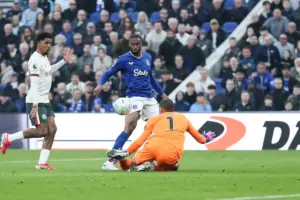
When isolating the home fixtures, Everton actually collected one less point at their new waterfront destination than they did during the emotional farewell year at Goodison. While Moyes managed to convert draws into wins at the Hill Dicky, the team also became significantly more vulnerable, dropping eight matches on their own turf compared to just five the year before. The defensive fortress of Goodison was replaced by a more volatile, open environment.
The next challenge is clear
No Evertonian wanted the Hill Dickinson to become simply a more modern version of what came before. The ambition behind the move was always bigger than that.
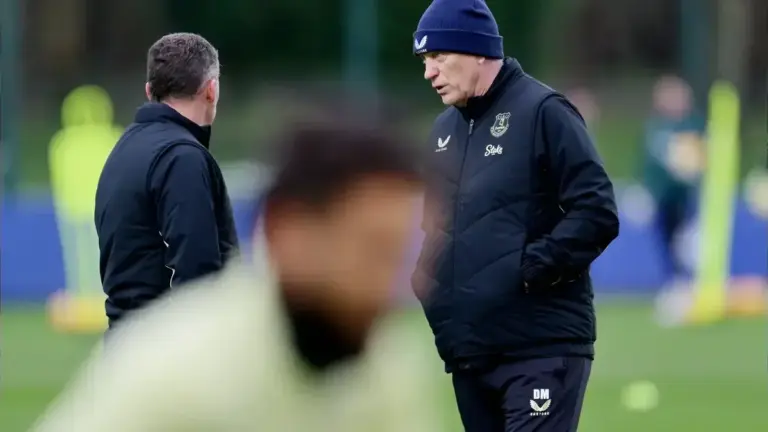
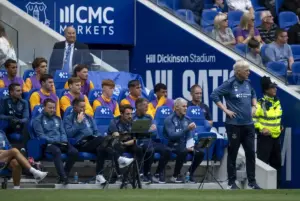
David Moyes now enters a second season with players, staff and supporters fully accustomed to their surroundings. The adjustment period has gone. The novelty too.
What remains is the challenge of turning a world-class stadium into an advantage on the pitch. Arsenal showed that a stadium move can provide a platform for progress. West Ham demonstrated that impressive facilities alone guarantee nothing.
Everton’s first season at Hill Dickinson Stadium was about settling in. The second has to be about moving forward.


Comments.
Loading comments…