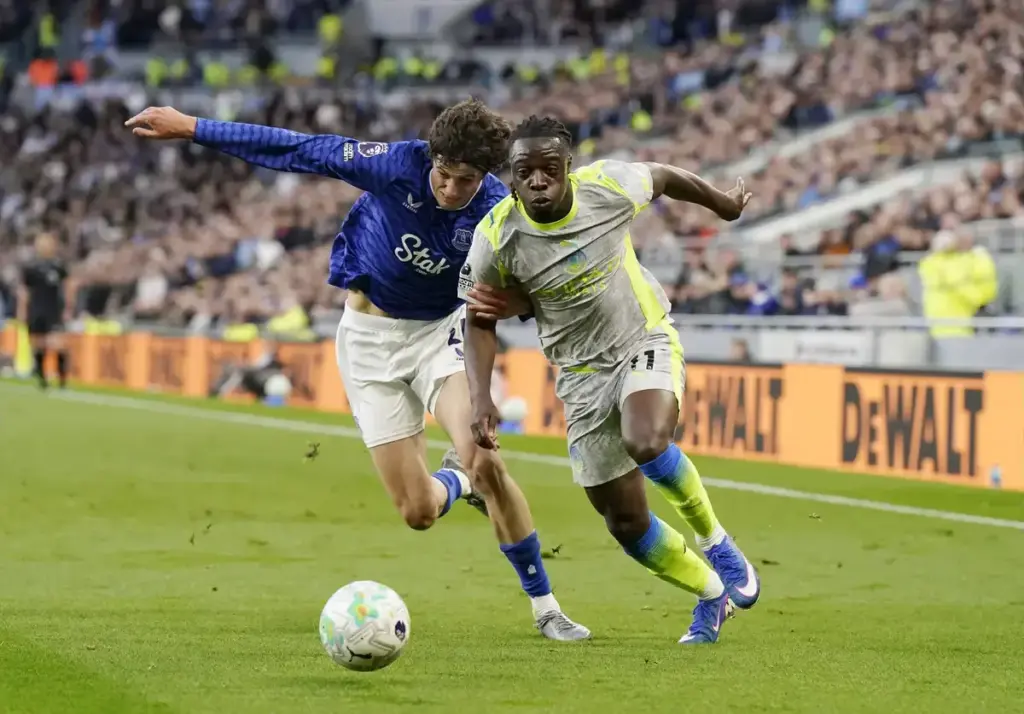

- First PL team to concede 90th-minute winners in 3 straight games.
- xG Gap: Everton have conceded 44 goals against an expected 52.51.
- League-high 8.51 overperformance suggests early-season luck has run out.
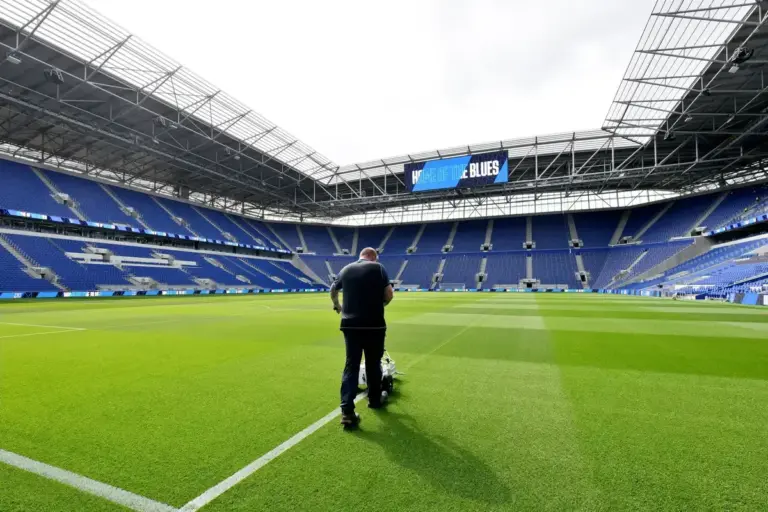
Fans will remember Everton’s 2025/26 season for many things—the move to the new Hill Dickinson Stadium, the banishing of the spectre of relegation, the long-awaited push for Europe—but lately one recurring problem is casting the end of the season in a more unflattering light: the inability to see out a football match.
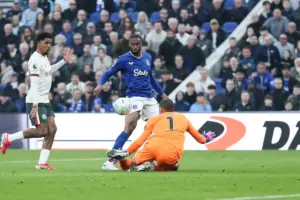
The Toffees recently made unwanted Premier League history. They became the first team to concede winning goals in the 90th minute (or later) in three consecutive fixtures. From the heartbreak of the Merseyside Derby to the recent 3-3 collapse against Manchester City, this “stoppage-time curse” could derail Everton’s season
Stats behind stoppage-time slump
For much of the year, the defensive numbers painted Everton as one of the league’s most resolute units. However, recent analysis by ToffeeWeb suggests that the number of goals conceded does not tell the full picture and instead fans should be looking at Expected Goals Against (xGA).
Everton’s defensive variance
| Metric | Value |
| Actual Goals Conceded | 44 |
| Expected Goals Against (xGA) | 52.51 |
| Overperformance Difference | 8.51 |
Everton’s 8.51 goal overperformance is one of the highest in the Premier League. This means the Blues have conceded far fewer goals than the quality of chances they’ve allowed would suggest.
Luck, wayward finishing and the excellence of Jordan Pickford can help explain this overperformance. But the problem with relying on these factors is that they are usually unsustainable. And of late, Everton’s good fortune appears to have run out as xGA regresses to the mean.
Failure of fundamentals
Evertonians can point to a recurring theme of individual and collective errors that have surfaced during these late collapses:
- Set-piece fragility: The inability to defend a corner effectively in the dying moments against Liverpool.
- Positional lapses: Vitaliy Mykolenko’s failure to track Jarrod Bowen for the West Ham winner.
- Elite threats: Keane and Tarkowski failing to sense the movement of Erling Haaland during the City comeback.
- Killer instinct: A general inability to seize the advantage when on top to kill matches off earlier.
None of these issues are strictly ‘new. They have been evident at times all season, but opponents are now punishing Everton more ruthlessly. This “regression to the mean” has simply exposed the cracks that were present since the opening day. The fact that it’s been occurring just rubs salt into wounds that were arguably inevitable.
What this means for the Toffees
The cost of these collapses has been very damaging. Had Everton held out in their last three outings, they would be four points better off. They are points that could prove crucial once the season ends in a few weeks.
For Moyes and his coaching staff, the mission for the final games of the season is clear: fix these problems before they become even more damaging. And that starts today against Crystal Palace.


Comments.
Loading comments…