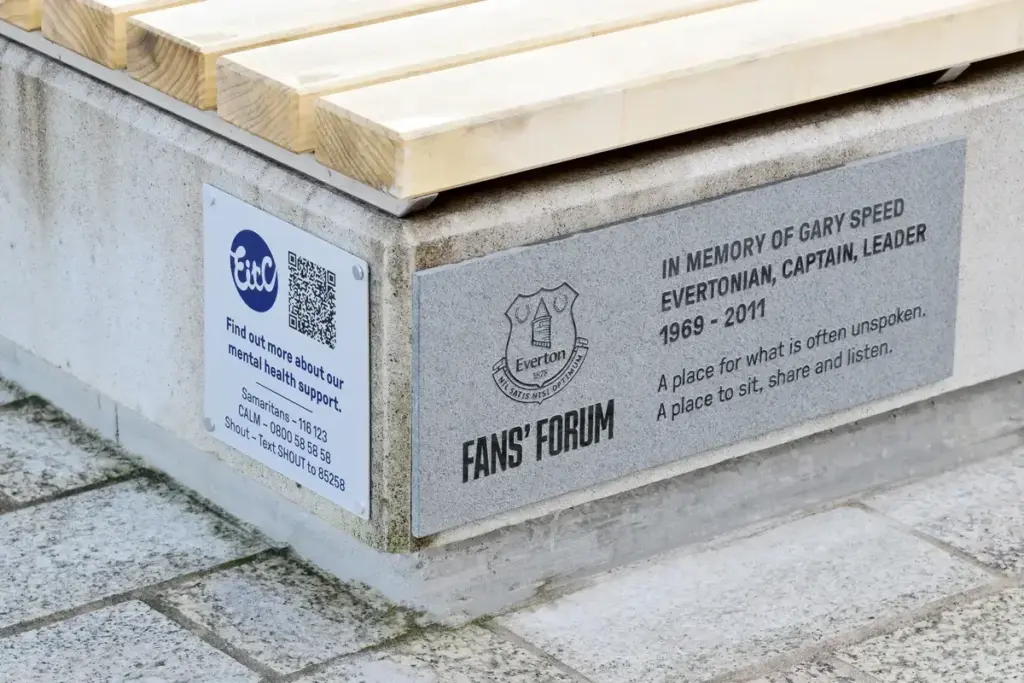

There is a bench outside the Hill Dickinson that many Evertonians will have walked past since the stadium opened. Today is a good day to stop and read what is written on it.
“In Memory of Gary Speed, Evertonian, Captain, Leader 1969–2011. A place for what is often unspoken. A place to sit, share and listen.”
Tuesday would have been Speed’s 57th birthday. The former Everton captain died by suicide on November 27, 2011, aged 42.
His death shocked football and, as Henry Winter noted, not even Speed’s family, closest friends or former team-mates knew he had been struggling.
The talking bench was unveiled last year in memory of a man who played 85 times for Wales and represented Leeds United, Newcastle United, Bolton Wanderers and Sheffield United as well as Everton. He made 65 appearances for the Toffees after joining the club he had supported as a boy in 1996, scoring 18 goals and later being appointed captain.
A place to sit, share and listen
The bench is a memorial, but it has another purpose. It is intended to encourage conversations about mental health and provide a place where people can talk and listen.
That gives particular significance to events at the Hill Dickinson today, World Suicide Prevention Day. The Prince of Wales is at Everton to launch On Your Side, a suicide prevention toolkit developed to help people involved in sport recognise when somebody may be at risk and respond appropriately.
Everton in the Community is involved in the initiative, which is being supported across British sport. Harry Kane and Alan Shearer are among the high-profile figures lending their voices to the campaign.
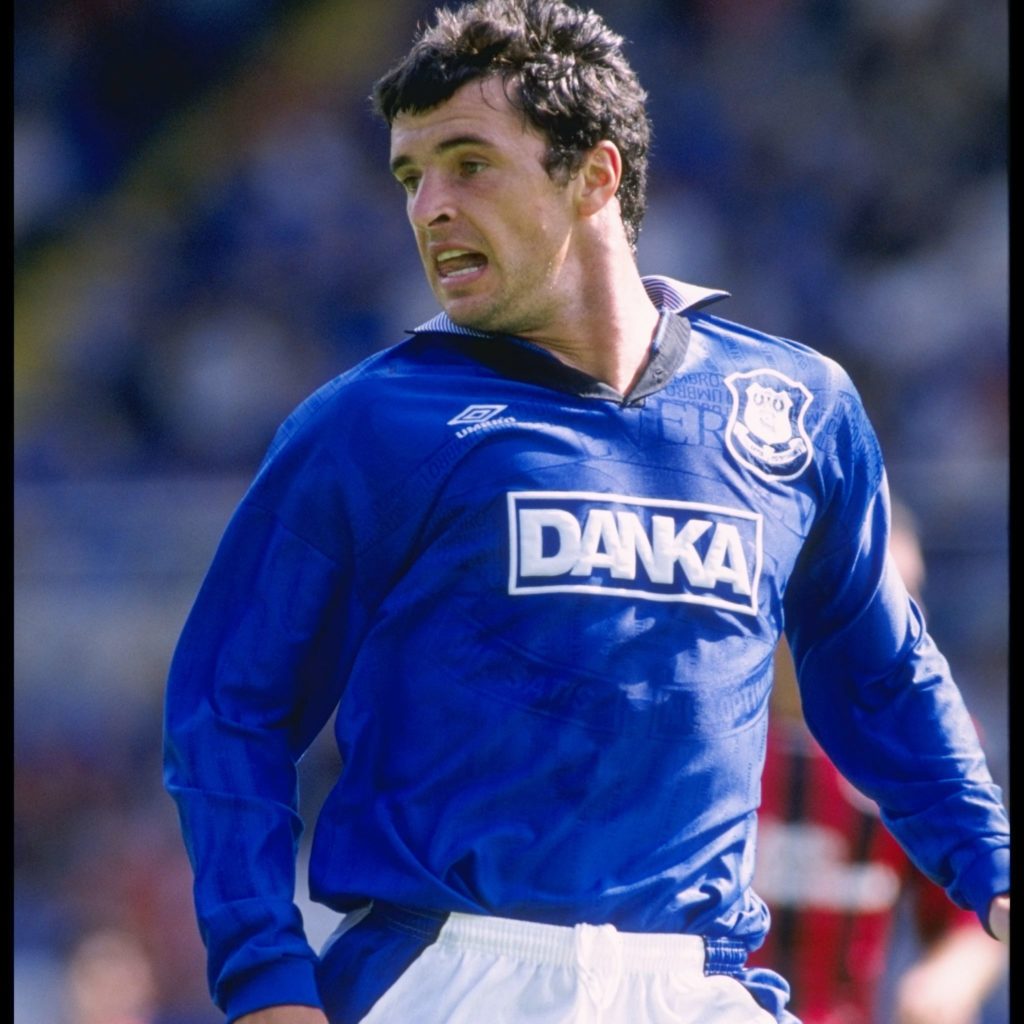
For Shearer, the subject is especially personal. He played alongside Speed at Newcastle, and the pair remained close friends.
“We can’t always know when somebody is struggling, but we can all be better at asking, listening and helping someone find the right support,” said Shearer.
That message sits naturally alongside the words on Speed’s bench: “A place for what is often unspoken. A place to sit, share and listen.”
Speed was an Evertonian, a captain of the club and an outstanding footballer whose career earned him respect far beyond Goodison Park. His name now sits outside Everton’s new home for a different reason.
Thousands will pass the bench on their way to matches at the Hill Dickinson. Hopefully, some will stop and, when it is needed, some will talk.
For the latest Everton stories throughout the season, you can follow our LIVE! Premier League 2026/27 News, Transfers, Updates & Viral Moments page.


Comments.
Loading comments…