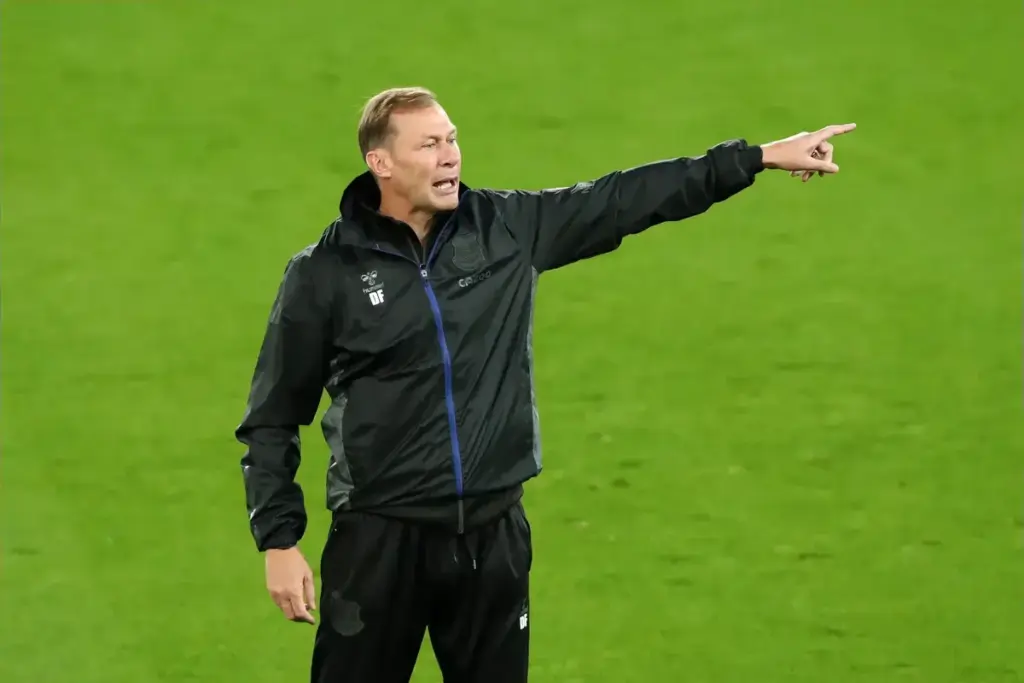

- Everton’s historic obsession with a bruising, physical centre‑forwards
- Transfer strategies routinely prioritise raw physical profiles over technique
- By demanding a rigid, old‑school target man, club fails to develop forwards
For nearly a century, Evertonians have revered the number 9 shirt. The fans romanticise it, write books about it, and demand that whoever wears it adheres to its standards.
Essentially, every Number 9 must try to tap into the spirit of Dixie Dean.
But as modern Premier League tactics undergo a radical, fluid revolution, a question arises: Has the myth of the traditional Everton centre‑forward become a tactical albatross holding the club back?
By anchoring the club’s identity to a bruising, aerial talisman, Everton may be trapping themselves in a bygone era of football – chasing a ghost that modern tactics have phased out.
Tactical trap of the target man
So‑called ‘legacy fans’ might roll their eyes at the terms, but the modern game does belong to flexible front lines, inverted wingers, and false nines. They are the kind of players who create space rather than just occupying it.
The world’s elite teams construct attacks around intricate patterns and rotational movement. The Toffees, conversely, often seem structurally trapped by the expectation of the classic Everton centre‑forward.
The “cross and hope” default:
For much of the Premier League era Everton’s default setting has been to get the ball wide, launch a cross into the box, and hope the number 9 can batter two centre‑backs to win it.
Single point of failure:
Managers frequently build Everton’s entire attacking system around a singular focal point. When that specific player is injured or out of form (think of the long‑running Dominic Calvert‑Lewin injury saga), the entire attacking structure collapses because the squad struggles to create goals any other way.
Modern defender’s comfort zone:
Modern Premier League centre‑backs are athletic beasts. They don’t mind a physical battle. By fielding a traditional number 9, Everton often give opposition defenders exactly the kind of game they enjoy.
Chasing ghosts in the transfer market
The obsession with this myth doesn’t just hurt Everton on the pitch; it warps the club’s talent identification and recruitment strategy.
Because managers and fans alike demand an Everton forward who can “lead the line” and “fight”, recruitment has historically been focused on physical profiles over technical proficiency.
The board has spent millions chasing players who fit the look of a traditional powerhouse, while recruiters overlook more agile, creative, and clinical strikers who fail to fit the historical archetype.
There must be some reason Everton bought Beto after all? And why the media consistently links them with Liam Delap
Evolution over tradition
As Everton navigate a new era, sticking rigidly to the concept of the big Number 9 feels less like honouring heritage and more like an inability to evolve. To progress, the club must let go of the obsession with the hulking warrior‑forward. To think more along the lines of Alex Young rather than Duncan Ferguson.
Because, until Everton builds an attack based on technical fluidity and collective goalscoring – rather than waiting for a saviour in that iconic shirt – the club risks staying trapped in a style of football that no longer works at the very top.


Comments.
Loading comments…