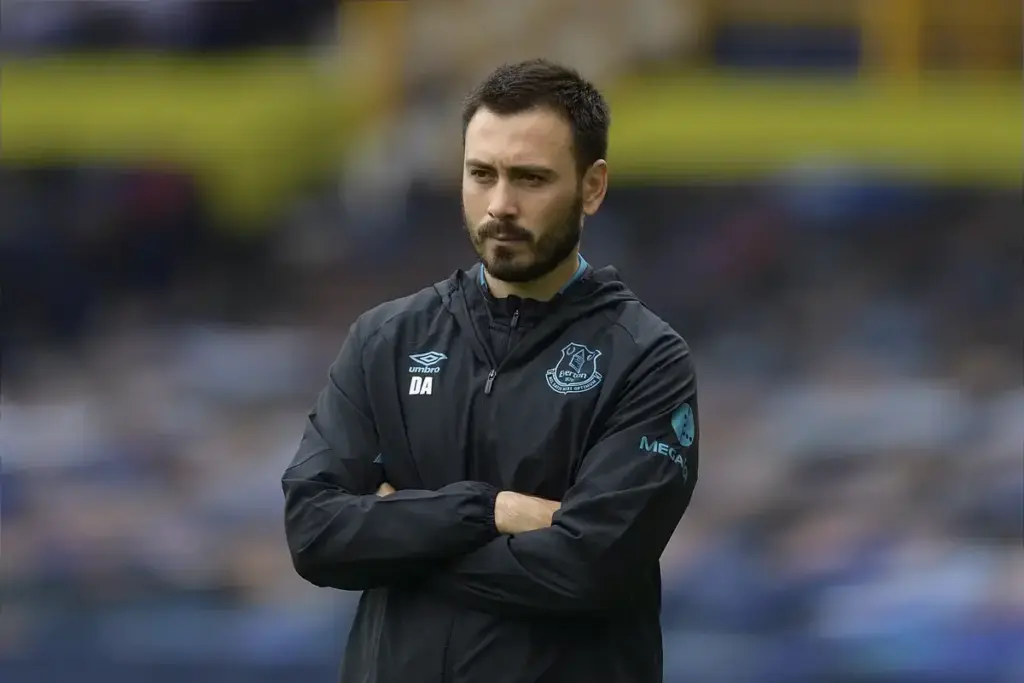

When news broke that LOSC Lille would serve as the final pre-season dress rehearsal at the Hill Dickinson on August 15, it did not register initially. Not to me anyway.
But Davide Ancelotti is coming back to Merseyside. And this time, he is walking alone.
For eighteen months between 2019 and 2021, Ancelotti Jr. was the silent, focused partner within the most famous father-and-son coaching dynasty in football.
While his father Carlo captivated the UK football media with his raised eyebrow and relaxed charm, those close to Finch Farm knew that Davide was the key to the operation.
When Real Madrid abruptly called their patriarch home, a vocal contingent of the Goodison fan base argued for the keys to be handed to the son. The belief was that his modern, data-driven methodology could drag a structurally struggling club into a new dawn… the one his father was supposed to be leading them to
Instead, Everton chose the familiar path of British managerial silliness. Five years later, as David Moyes builds a risk-averse, low-block team designed for gradual progression under the Friedkin Group, Davide returns at the helm of Champions League-bound Lille.
His journey since leaving L4 has been a remarkable, highly calculated exercise in shedding a legendary surname to build an identity entirely his own.
Finch Farm apprentice: More than just a surname
To understand the emotional connection Evertonians still feel toward Davide Ancelotti, one must understand how he defied the lazy tropes that inevitably follow a famous son. When he first arrived on Merseyside, the outside world viewed it as nepotistic. Yet, within weeks at the training ground, that perception had long gone.
      The Evolutionary Path of Davide Ancelotti (2012–2026)

[PSG / Real Madrid]  --->  [Bayern / Napoli / Everton] --->  [Botafogo / Lille]
   Fitness Coach                Tactical Assistant             Head Coach
(Learning the Elite)          (The Finch Farm Architect)    (The Solo Autonomy)
Davide did not hide behind his father’s reputation. He ran the training sessions with an intensity that surprised everyone. He designed the complex set-piece routines, overhauled the data analytics department, and formed trusted relationships with a squad that tended to chew up managers and coaches spit them out.
When Carlo left, the sense of betrayal was real, but for many fans, the real tragedy was the loss of Davide’s modern footballing brain. His departure felt like the closing of a door to a modern, forward-thinking future – one that the club is only now beginning to rebuild.
The solo odyssey: Madrid, Rio, and the search for autonomy
The path Davide trod after leaving Merseyside was one of high-stakes education. He returned to Real Madrid as assistant, collecting two more Champions League winners’ medals, while subtly modernising the veteran squad that had conquered Europe. Yet, a man with his own ambitions can only sit in the passenger seat for so long.
In July 2025, Davide made the brave choice to sever the umbilical cord. He accepted his first head coaching role at Botafogo in Brazil. It was a brutal baptism of fire.
Stranded in the hyper-pressurised, chaotic environment of Rio, he was heavily criticised by a sceptical local media who accused the club of ‘hiring a surname.’
Yet, during those six months in Rio, Davide demonstrated a steely resilience that mirrored his father’s calm when under pressure. He steadied a volatile squad, guiding them to a sixth-place finish and securing crucial Copa Libertadores qualification before the club’s complex political situation forced his winter departure.
It was brutal, but he had proven he could survive on a different continent entirely on his own merit.
The ultimate vindication in Northern France
When Ligue 1 high-flyers LOSC Lille officially unveiled Davide Ancelotti as their new head coach three weeks ago on a two-year contract, it represented the ultimate vindication of his solo journey.
It was no sentimental appointment; Lille are a sophisticated, data-led club preparing for a major UEFA Champions League campaign. They chose Davide because he represents the vanguard of modern European coaching.
Inheriting a club that finished third in France, Ancelotti has been tasked with maintaining an expansive, possession-heavy style of play while consistently blooding young talent. At 36-years-old, he has achieved what many thought impossible: he has transformed himself from ‘Carlo’s son’ into one of the most coveted young managers in Europe.
A romantic mirror on the Mersey
When Davide steps into the technical area at the Hill Dickinson on August 15, it will be emotional. For the crowd entering their second full season at the waterfront, his presence will act as a living, breathing timeline of Everton’s recent history.
He represents the romantic alternative – a tantalising reminder of a time when Everton dared to dream of an elite, modern continental identity before financial reality forced a retreat into grim, chaotic pragmatism.
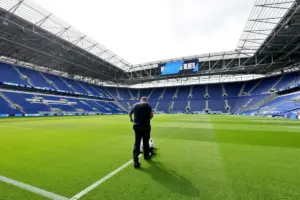
Seeing Davide’s team control the tempo of a match on Everton’s new turf will stir a blend of pride and envy among Evertonians.
Davide Ancelotti left Merseyside as an apprentice working in the shadows. He returns as a Champions League manager in his own right. For ninety minutes in August, Evertonians will get to witness the reality of the man that many wished they had kept.

Comments.
Loading comments…