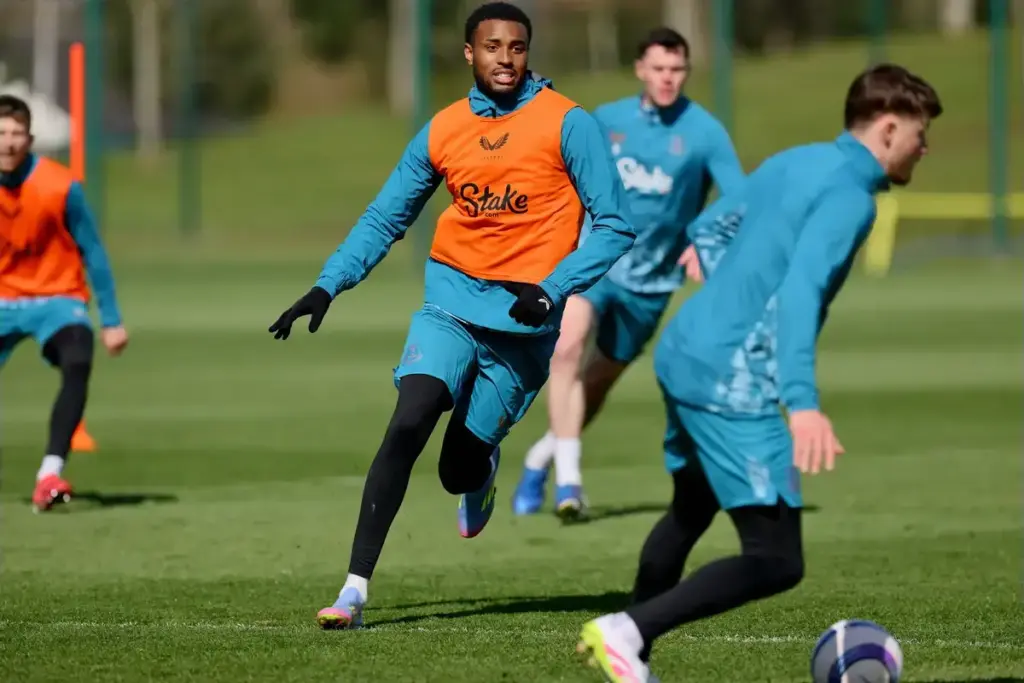

- Nick Cox has explained why player development journeys are rarely straightforward.
- Former Man Utd academy chief believes young players need a variety of pathways.
- Comments offer insight into Everton’s long-term development strategy under TFG.
Everton’s long-term success will not be judged solely by how many teenage stars break into David Moyes’ first team over the coming years.
That appears to be one of the key messages behind recent comments from technical director Nick Cox, who has offered fresh insight into the thinking driving Everton’s player development strategy as the club continues to modernise its football structure.
The Blues have spent the past year reshaping their football leadership model under The Friedkin Group, moving away from the traditional director of football approach and towards a specialist structure covering technical development, recruitment, analytics, football operations and player trading.
While first-team recruitment understandably attracts the majority of attention, Everton are also focused on building sustainable pathways for player development across the club.
Everton looking beyond traditional academy expectations
Writing on LinkedIn, Cox challenged common assumptions surrounding youth development after seeing statistics highlighting that a large proportion of England internationals were registered with academies from a young age.
The Everton technical director argued that such figures can often create a misleading impression of how player development actually works.
According to Cox, progression to the elite level is rarely linear, with players frequently following very different routes to professional football.
That philosophy reflects a wider shift in modern football, where development is increasingly viewed as a long-term process rather than a race to produce first-team footballers as quickly as possible.
For Everton, that approach feels particularly relevant as the club seeks to strengthen pathways from Finch Farm to the senior squad while maintaining the standards required to compete in the Premier League.
Why the message matters for Evertonians
Cox’s appointment formed part of a wider restructuring of Everton’s football department.
Working alongside director of scouting and recruitment James Smith, director of football strategy and analytics Chris Howarth and player trading lead Nick Hammond, Cox represents a move towards specialist leadership across the club’s football operation.
His reputation was built during a successful spell at Manchester United, where he oversaw significant changes to the academy structure and observed the development journeys of a number of players who progressed into senior football.
In his recent comments, Cox referenced Kobbie Mainoo’s pathway through Manchester United’s development system as an example of how every player’s journey contains challenges, setbacks and periods of growth.
For Everton supporters, perhaps the most encouraging aspect of that message is the emphasis on patience.
The club has produced several notable academy graduates in recent years, but the challenge remains creating a system capable of consistently developing players for both the first team and the wider football market.
The bigger picture at Finch Farm
As Everton prepare for a new era at Hill Dickinson Stadium, player development remains a significant part of the club’s long-term strategy.
While supporters naturally focus on identifying the next breakthrough talent, Cox’s comments suggest success should be measured more broadly than simply counting first-team debuts.
Developing elite footballers takes time, and not every player will follow the same path.
For a club continuing to modernise its football operation under new ownership, that patience and long-term thinking could prove crucial to building a sustainable future.




Comments.
Loading comments…